
What Probate Covers in Faribault County
Probate in Faribault County is filed in Faribault County District Court. The Minnesota Judicial Branch states that the District Court has original jurisdiction over probate matters filed in the county. Local probate case types include estates, formal probate, other probate, guardianship, conservatorship, and trust matters. Probate calendar entries in the research showed case numbers such as 22-PR-26-332, hearing type Probate Hearing, and party roles including decedent, petitioner, attorney, and personal representative.
The Minnesota Judicial Branch forms site is the official starting point for statewide probate and guardianship forms. The Minnesota court forms page is one documented source for users preparing estate, probate, guardianship, or conservatorship filings.
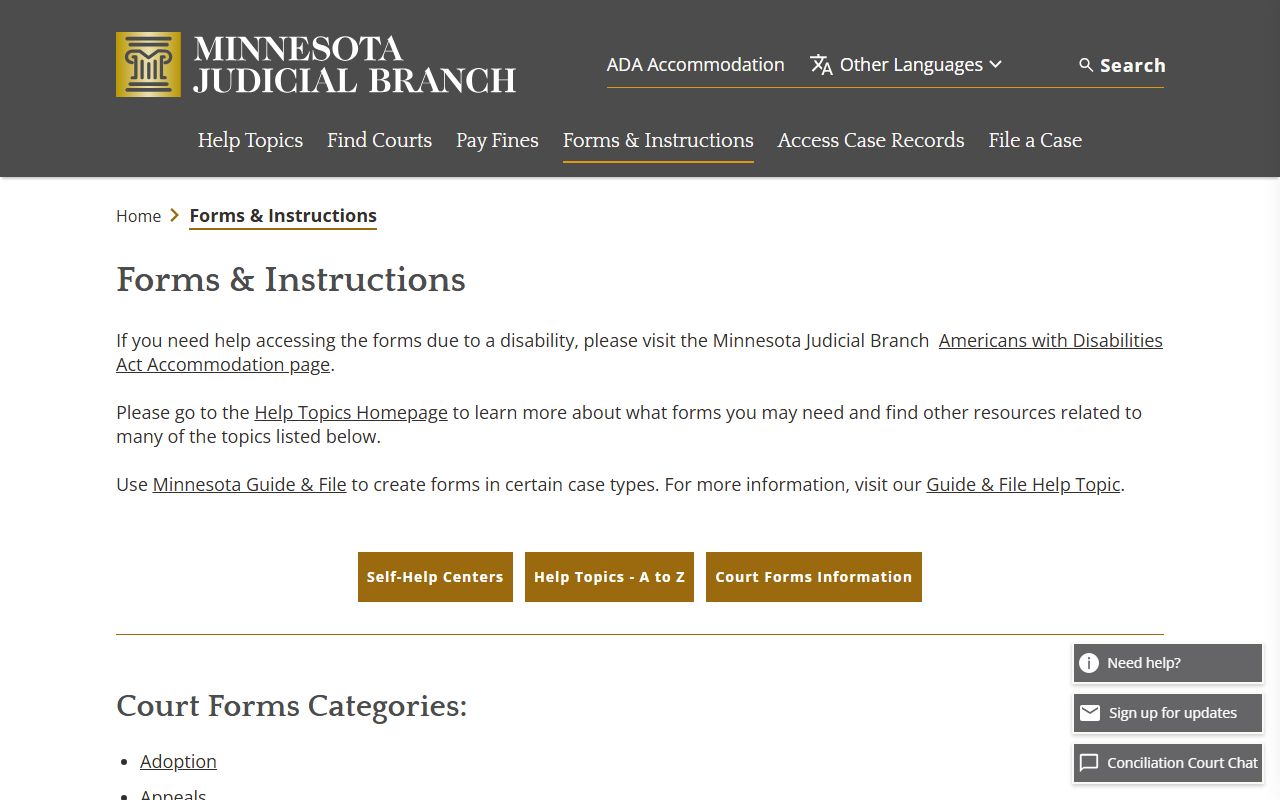
Those forms must still be filed in the correct District Court when a Faribault County case is being opened or administered locally.
Probate Terms Defined
Probate filings use recurring terms that identify the person who died, the person asking the court for action, the person appointed to administer the estate, and the type of court authority being requested.
- Decedent
- The person who died and whose estate or property is involved in the probate case.
- Petitioner
- The person asking the court to open a probate matter or issue an order.
- Personal representative
- The person appointed by the court to administer an estate.
- Testator
- A person who made a will.
- Intestate
- Dying without a valid will.
- Guardianship
- A court case about authority to make personal-care decisions for another person.
- Conservatorship
- A court case about authority to manage another person's financial affairs.
- Trust
- A legal arrangement in which property is managed by a trustee for beneficiaries.
How to Search Faribault County Probate Division of District Court
Use Minnesota Court Records Online for public Faribault County probate case information. MCRO allows Case Search by case number, name, or county, and Document Search by case number for public documents available online. MCRO states that public documents filed on or after July 1, 2015 may be available for Formal Probate, Other Probate, Guardianship and Conservatorship, and Trust case types, but not every public courthouse record is available remotely.
- Open MCRO Case Search and choose a name or case-number search.
- Select Faribault County when possible to avoid unrelated statewide results.
- Look for probate case numbers with the PR case-type code, such as the calendar example 22-PR-26-332.
- Use MCRO Document Search when the case number is known and public documents are available online.
- Check the Faribault County District Court calendar for scheduled probate hearings.
- Request certified copies or older records from Court Administration when MCRO does not provide the needed document.
Minnesota's small-estate affidavit statute, Minn. Stat. 524.3-1201, is relevant when a full probate estate may not be required for collection of personal property.
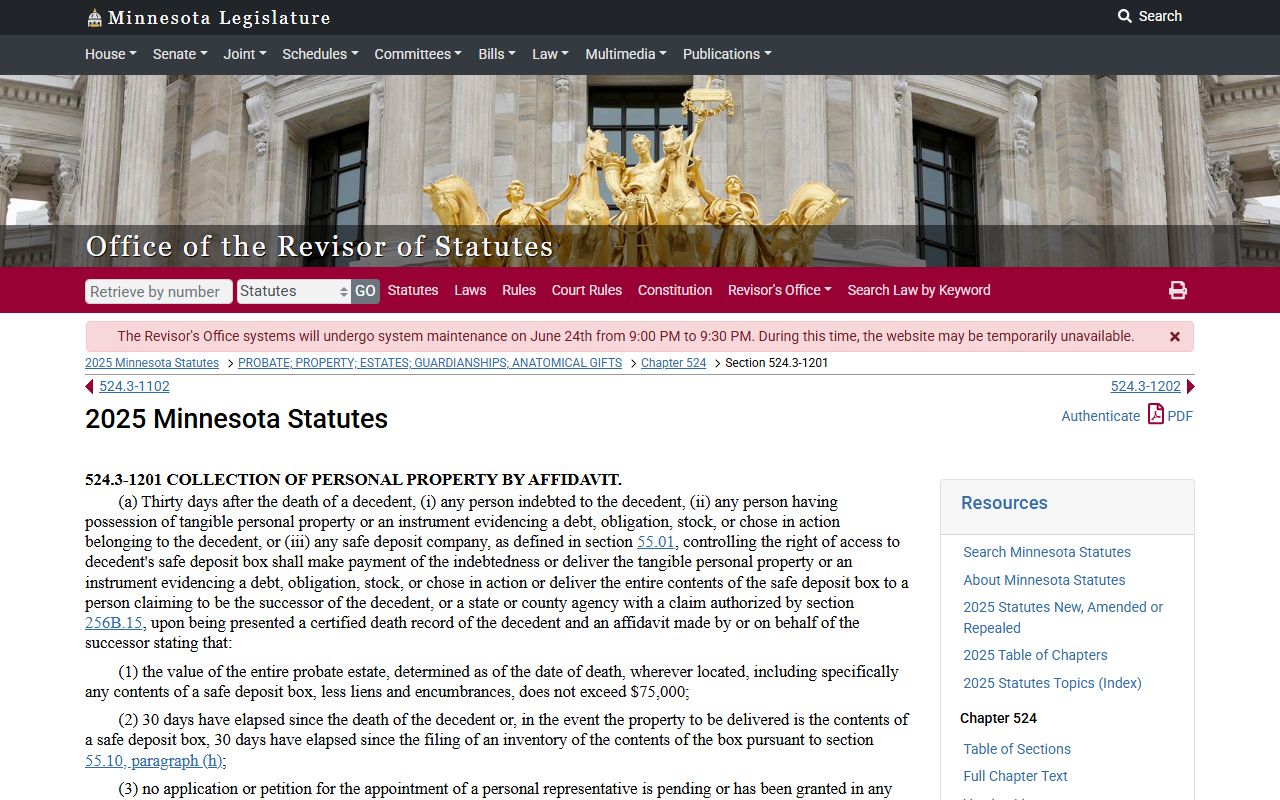
The exact threshold and current statutory conditions should be read from the statute before relying on the affidavit path because the research did not capture a dollar amount.
Probate Courts in Faribault County
Faribault County does not have a separate county probate court. Probate, guardianship, conservatorship, estate, and trust matters are handled by the Probate Division of District Court through Faribault County Court Administration at the courthouse in Blue Earth.
Faribault County District Court
Faribault County Courthouse
415 North Main Street
Blue Earth, MN 56013
(507) 526-6273
Fax: 507-618-5869
Monday-Friday, 8:00 a.m.-4:30 p.m.
Probate Filing Fees
Probate fees are statewide District Court fees unless a waiver applies. Court Administration is also the channel for certified and exemplified copies of probate orders, letters, and other court instruments.
| Probate item | Amount |
|---|---|
| Estates, trusts, guardianships, conservatorships first paper filed | $310 |
| Deposit of wills for safekeeping | $27 |
| Certified copy of court instrument | $14 |
| Exemplified certified copy | $28 |
| Uncertified copy | $0 |
Self-proved wills are governed by Minn. Stat. 524.2-515.
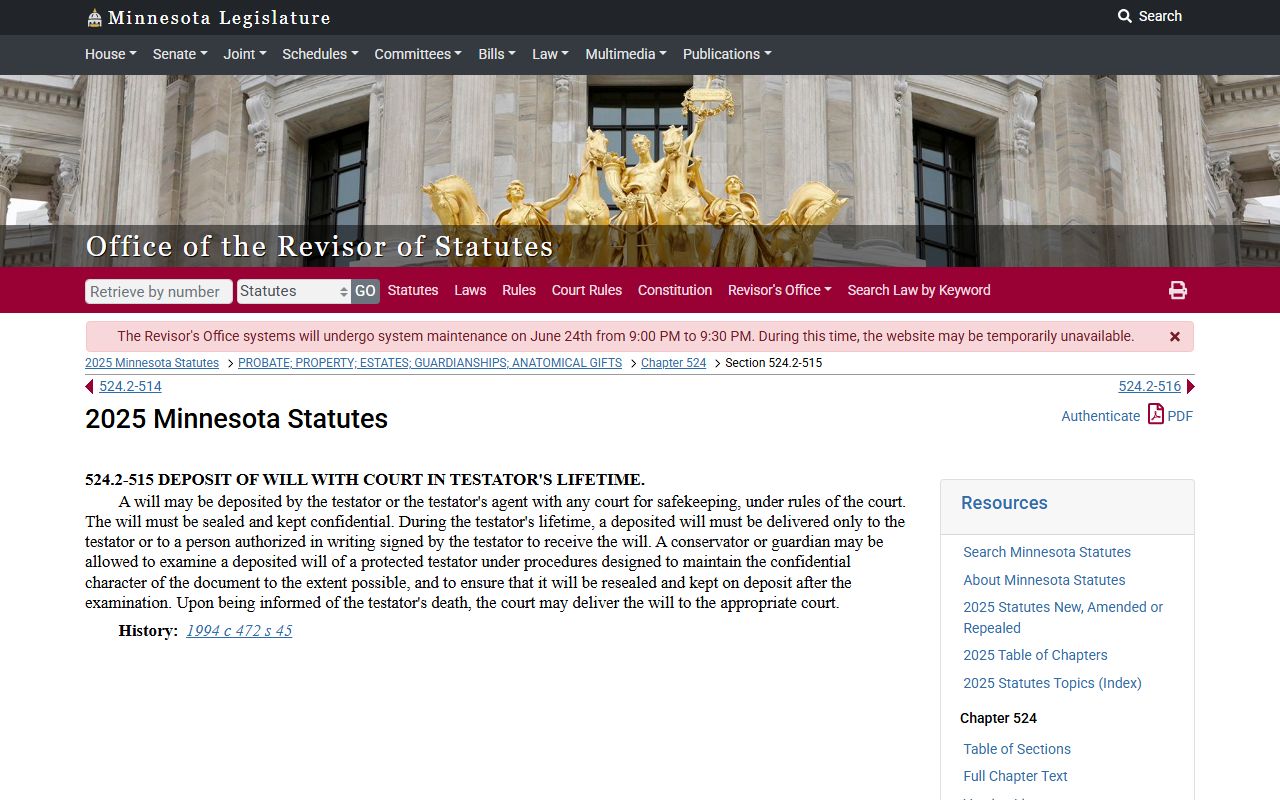
The will-deposit fee in the District Court fee table indicates that will safekeeping is handled through court administration under statewide court practice.
What Faribault County Probate Division of District Court Records Show
Public probate records may show the case number, PR case-type code, filing date, decedent, petitioner, personal representative, attorney, hearing date, hearing location, judicial officer, orders, letters, inventories, accountings, and other public documents when remote-access rules allow. The Faribault County calendar inventory showed Probate Hearing entries in the Large Courtroom and judicial officer examples including Troy G. Timmerman.
When the record is needed for a bank, title transfer, estate account, or another official transaction, a certified copy from Court Administration is normally more useful than a printed MCRO screen. MCRO is a public access tool, but the Minnesota Judicial Branch does not treat MCRO results as certified court records. For that reason, a Faribault County probate user should identify the case online when possible, then request the specific probate order, letters, or court instrument from Court Administration in the copy type required by the receiving institution.
Older probate files, documents not available remotely, and records with access limits may require courthouse terminal access or direct contact with Court Administration. The State Law Library guidance in the research also notes that public access computer terminals at Minnesota district courthouses can provide access to some records not available online. That courthouse-terminal fallback is especially important when a probate case exists but the needed document is not downloadable through MCRO Document Search.
Genealogy researchers may also need Recorder resources. The official Recorder research and genealogy page describes research hours and vault rules.
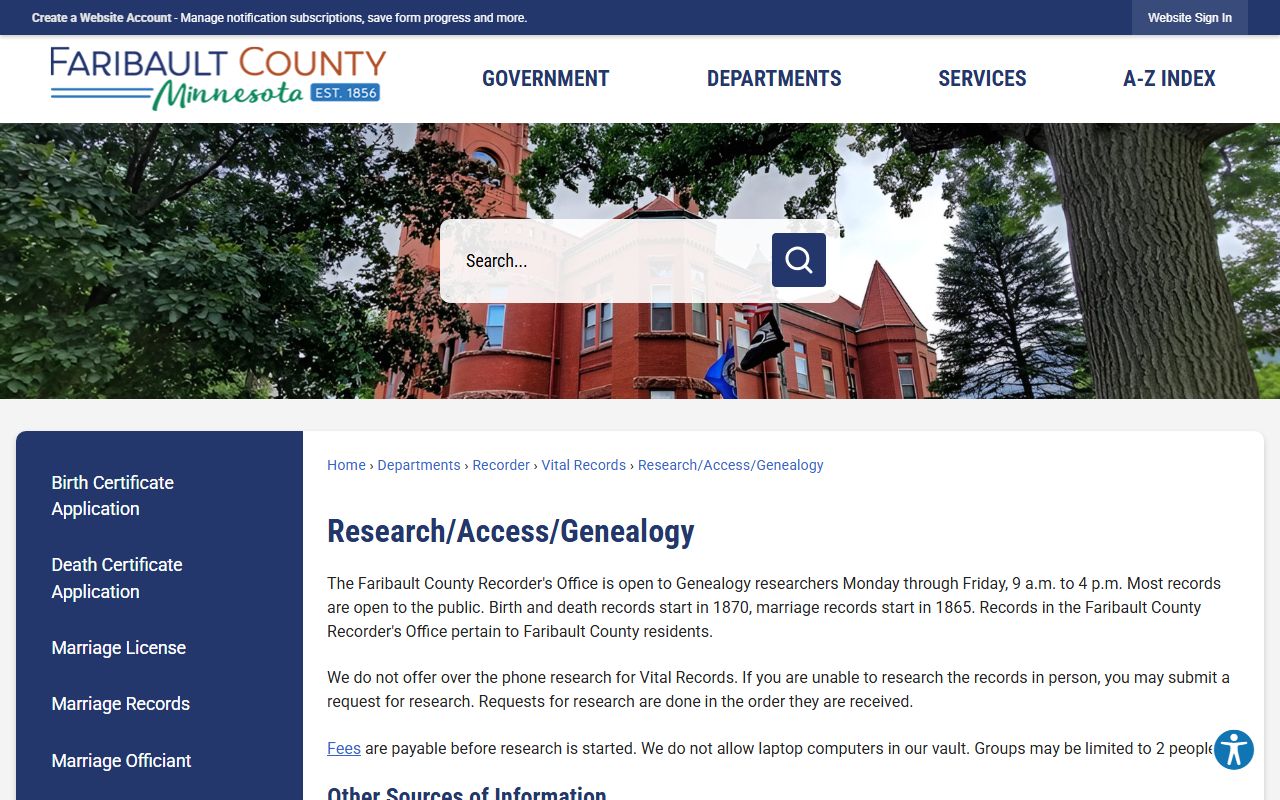
That office is useful for vital and historical context, but probate case files remain court records handled by District Court.
Restricted Probate Division of District Court Records
Not all probate-related documents are remotely available, even when a case exists in public court systems. Guardianship and conservatorship files may include confidential medical, financial, or protected personal information. Court orders, statutes, and Minnesota public-access rules can limit what appears online through MCRO and what must be viewed at a courthouse terminal or requested through Court Administration.
Minnesota's general access rule for government data is Minn. Stat. 13.03, but court records also follow Judicial Branch public-access rules.
For Faribault County probate files, the most reliable sequence is MCRO first, courthouse terminal or Court Administration second, and certified copies from Court Administration when an official record is required.